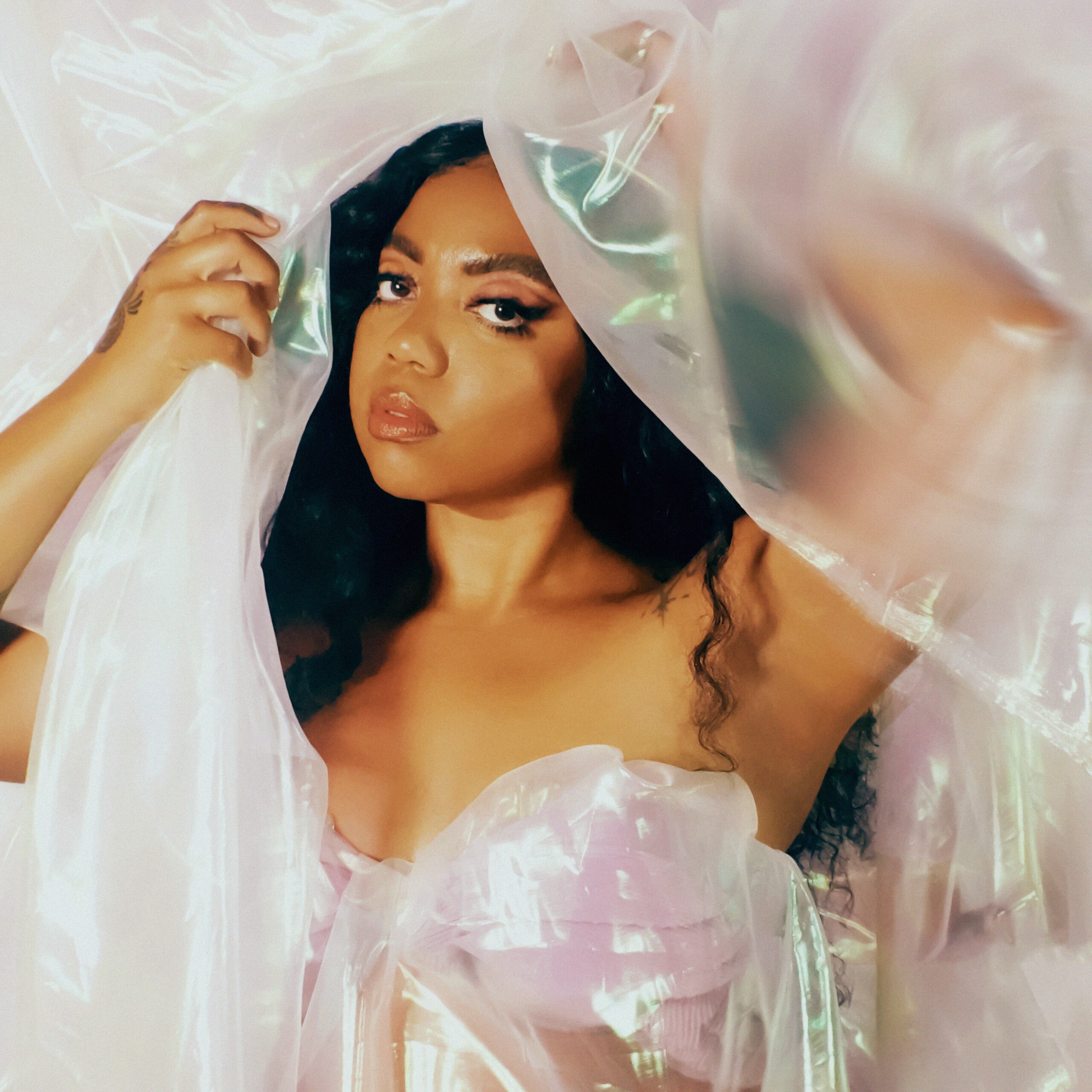
A.J. Haynes is an award winning interdisciplinary enchantress from the deep South and leader of the acclaimed soul power band Seratones. Her work spans performance, songwriting, and immersive storytelling, rooted in the belief that art is collective community care. As a reproductive justice advocate, she engages sound and ancestral technologies to affirm the body as a sacred site of liberation and pleasure. With a voice both powerful and tender, A.J. plays in the liminal spaces of diasporic sound—soul, rock & roll, disco, gospel, folk, and found-soundscapes—conjuring spellbinding experiences uniquely her own.
***
This interview has been edited for clarity
NEW ORLEANS REVIEW
Congratulations on your Grammy win for Best Regional Roots. Was Zydeco or other Louisiana genres a significant influence on developing your sound, or is there a different part of your cultural background that’s been most impactful to your music?
AJ Haynes
I didn’t grow up steeped in the Zydeco tradition, but my family members did go on Zydeco rides, and I grew up listening to Clifton Chenier and other Zydeco artists. My foundational musical influences are gospel and jazz. I grew up in a Southern Baptist gospel tradition. I like to synthesize a lot of influences and make my own sound. It’s challenging, but I find it to be more lasting in terms of how I want to keep playing the songs; they keep being interesting to me. I came up in my adolescence in DIY experimental punk shows and that had a major influence on not only my sound, but my ethos and the way that I like to organize– cultural organizing, but also justice organizing, specifically reproductive justice. It’s all integrated.
NOR
Speaking of your activism, you are a part of the compilation album Noise for Now: Volume 2, which supports reproductive rights and abortion access. Why did Everything is Change feel like the right choice for that compilation?
AH
The song was inspired by our current conditions and what caused them, as well as the genius of Octavia Butler and the texts Parable of the Sower and Parable of the Talents. Within those books, the Earthseed verses have been really supportive for me. [These texts] are trying to warn us about what’s possible if we keep hurtling towards the death trap that is white settler colonialism and white Christian nationalism. She also offers, within that warning, some tools. One of the main Earthseed verses is that god is change. Everything you touch, you change, everything you change, changes you. The only lasting truth is change. Change is ambivalent; it just is. It’s a constant of how we think about laws of existence within our lifetime. Everything’s always moving, so how are we going to shape it instead of trying to stop it?
I wrote that song in my cabin in Mississippi when I was living there for a while and recorded it myself. It didn’t necessarily fit into the body of work I had, but it seemed like a perfect fit for Noise for Now. Being an independent musician and releasing music is a little overwhelming, and to have the process and system of Noise for Now, which is so values aligned, made perfect sense. I used to work at Hope Medical Group for women, which was the last abortion clinic in Louisiana. I was board chair of the Louisiana Abortion Fund for several years and saw it through a major transition into a Black feminist reproductive justice practices… We’re doing these things because if we don’t, then we’re not contributing to our survival.
NOR
You mentioned that that gospel shaped your sound, and I’ve heard you play the harmonium. Will you tell me about your perspective on music as a devotional practice?
AH
Music is one of my devotional practices. One of my favorite musicians of all time is singer-songwriter genius Tom Waits. Tom Waits says that music is just something to be doing with the air. I believe that there’s traditions and lineages that need to be honored and those people given praise, celebration, credit, and also, it is literally just moving sound through the body. The air coming into your body is a practice of devotion in itself. I feel blessed that I have a voice that people like to listen to, but I think that everyone should sing, even if you sing badly. I think it’s such an important somatic ancestral practice for everyone to evolve.
NOR
We were just talking about kirtan before this, which is about offering your voice, not as a performance, but as an experience. There’s so much value in a voice like yours, and there’s also value in the experience of moving air through your body.
AH
Exactly.
NOR
Do you have any rituals that help your creativity flow?
AH
I’m just at wonder most of the time. I don’t necessarily have daily rituals, but taking a moment to pause and cultivate moments of awe from really mundane things. My community and my friends are always people that inspire me. We really pour into each other, and being present with them is like a ritual. And of course movement and yoga. I love yoga nidra.
NOR
You’ve described yourself as an alien and have said that when performing for people who don’t look like you, you need to have an ‘unshakable knowing of who you are and who you are not.’ Could you elaborate on this and tell me what it means to create from an othered perspective and how it impacts the experience performing?
AH
That’s a really rich question. What first comes to mind is, who controls performance spaces, who funds them, who has access to them, and who has the time. Unfortunately, in a lot of places in the states, art is not seen as something that’s accessible. There is a trend in which artists of color and queer artists find ourselves in front of audiences and don’t necessarily reflect our same experiences, and that can get really draining. I think how that must have deteriorated Nina Simone’s mental health. It’s a very strange cognitive dissonance, specifically in the US, where your art and performances are rewarded, but your human rights aren’t. So to sit with that cognitive dissonance constantly, especially if you’re a conscious artist who is writing from their experiences, is not even political, it’s just my reality. Unless you have a very strong foundation in your core, you can get very disoriented and resentful. James Baldwin talks about this kind of schizophrenia. I don’t have that experience as much when I played abroad, specifically in Europe, because there’s a different kind of dissonance– I feel like other countries have so much more reverence for black culture.
And I think that goes for any othered perspective in any dynamic. A trans person playing in front of a bunch of cis people has gotta feel really disorienting. That gaze and perspective actually does have an impact, because for me, music is a collective, communal experience. It can be a little tenuous, but coming back to black feminist praxis, like the Combahee River Collective, if Black women are free, that means none of these systems of oppression could exist, so everybody actually benefits. So, being literally in the center, and being free in that moment, is important for world building, and it is important for everyone’s liberation.
In the entirety of my performance I’m connecting with people who really don’t have the same lived experience, cause that’s the point of music. If you think about whoever is the most vulnerable in any context, if they can be recognized and protected and feel free, then that would necessitate the destruction of all of these really awful things. If disabled trans Black women were free, we could just be hanging out in the grass, instead of whatever the fuck is happening.
NOR
During your performance [at Black Americana fest], you talked about how we all entered a spaceship when we walked in. It seems like there’s a playful side to all of this. How do you get in touch with that?
AH
I got very lucky that my mom was a very playful person. I don’t think of my elders as old because all the people that raise me have such youthful spirits and are always curious. Ancient and also like children. So part of it is epigenetic; I inherited this, I was born with this. And also, my play is very serious. I am very much an optimist and a catastrophist– both of those things live right next to each other. It gives me an adaptability that is integral to how I create anything.
It’s ancient wisdom. If you look at any first nations cosmologies, any diaspora, I’m thinking of people as a global majority of people of color; for example, I’m learning about the Sami people in Sweden, and they have a whole goddess who’s offering her butter who helps people with their mental health. If you go back far enough, there are cosmologies where play is integrated. The trickster has a connotation of disempowerment, but I think that’s actually the most powerful thing to be.
NOR
The Fool is like the trickster archetype. There’s so much play and in turn, liberation.
AH
Right. Before Pamela Coleman Smith, there was no minor arcana narrative, and the major arcana narratives did not have all these other integrated symbols. She was coming from traditions of Caribbean folk tales and children’s stories. She was racially ambiguous, very much depicted as a trickster, a pixie, and within the Smith deck, all of the characters appear beige, but there’s what Emily Dicksinson calls a slant.
NOR
You’ve mentioned Octavia Butler, James Baldwin, Emily Dickinson, and I know that you love Audre Lorde. Do you have a favorite piece of literature or a poem to recommend to the readers of New Orleans Review?
AH
For Audre Lorde, Uses of the Erotic is an essential read. Read it in the context of someone who didn’t have the language of non-binary. Know who she was writing to. Coal is my favorite poem of hers.
There’s this propensity, this compulsion, to want to be the expert of every little thing, but I think find that you one piece you like. If the work itself holds weight, if it is actually that nutritious, like clay– something that has memory– then the more you revisit it, the more the meaning will open to you, and you’ll see it in different meanings at different times. I think that’s such a thoughtful question because we live in a world where things are quips and one offs and quotes taken so far out of context. Go to something within its context. Dig in. I rock with a bit of structuralism.
NOR
Do you have any advice for aspiring musicians?
AH
Embodiment, embodiment, embodiment. What do you need to stay in your body? Make decisions from there. If you create for a system of things that you’re told to, then you’re always gonna abandon yourself, and then you won’t know what the fuck you’re making. Especially as we’re in an era where our ideas are being co-oped and our identities are being AI generated and taken without our consent. There’s so much disembodiment that I’m seeing in music. Stay in your body. Do not abandon your body, because someone else will take advantage of that.
Not to get dark or whatever, but what are the relationships that you need to survive and build around that, not around this arbitrary algorithm that’s designed to take your attention. Create your ecosystem, and move relationally. Do not discard people. Know the difference between discomfort and danger. What is the difference between discomfort and danger? Know that intimately. You gotta be able to move through conflict. Don’t be canceling people all the time, because if you do that, then you’re taking away from the possibilities of your ecosystem of care.
And ultimately as an artist, what you need is protected time. I’ve been able to create because I have friends, like, ‘yeah, you can go stay at my house for a month and just chill out.’ Before I moved here, my friend let me stay with her for a summer. I wrote a ton of songs, partied, and had a great time. And that set a foundation for how I wanted to be in relationship with the city outside of just reproductive justice organizing.
Slow down. Don’t feel like you have to accelerate just for the sake of it. There are gonna be ebbs and flows. After every performance high, there is a low. Plan for that. After every tour, I slip into depression. I don’t think depression is necessarily a bad thing. We’re supposed to be high all the time? No. You’ve got to be sad. Something that’s pathologized could in fact, just be something that’s necessary.
For any human being, that would be my advice, and especially for artists, because so much of the entertainment industry is just that– its entertainment, smoke and mirrors. And it’s a machine, so it’s not designed for your welfare. There’s this la paperson essay called “The Third University is Possible”. He says, “Examine the hearts of the machines that you hate, even when they’re dangerous.” So, question what you’re supposed to do.
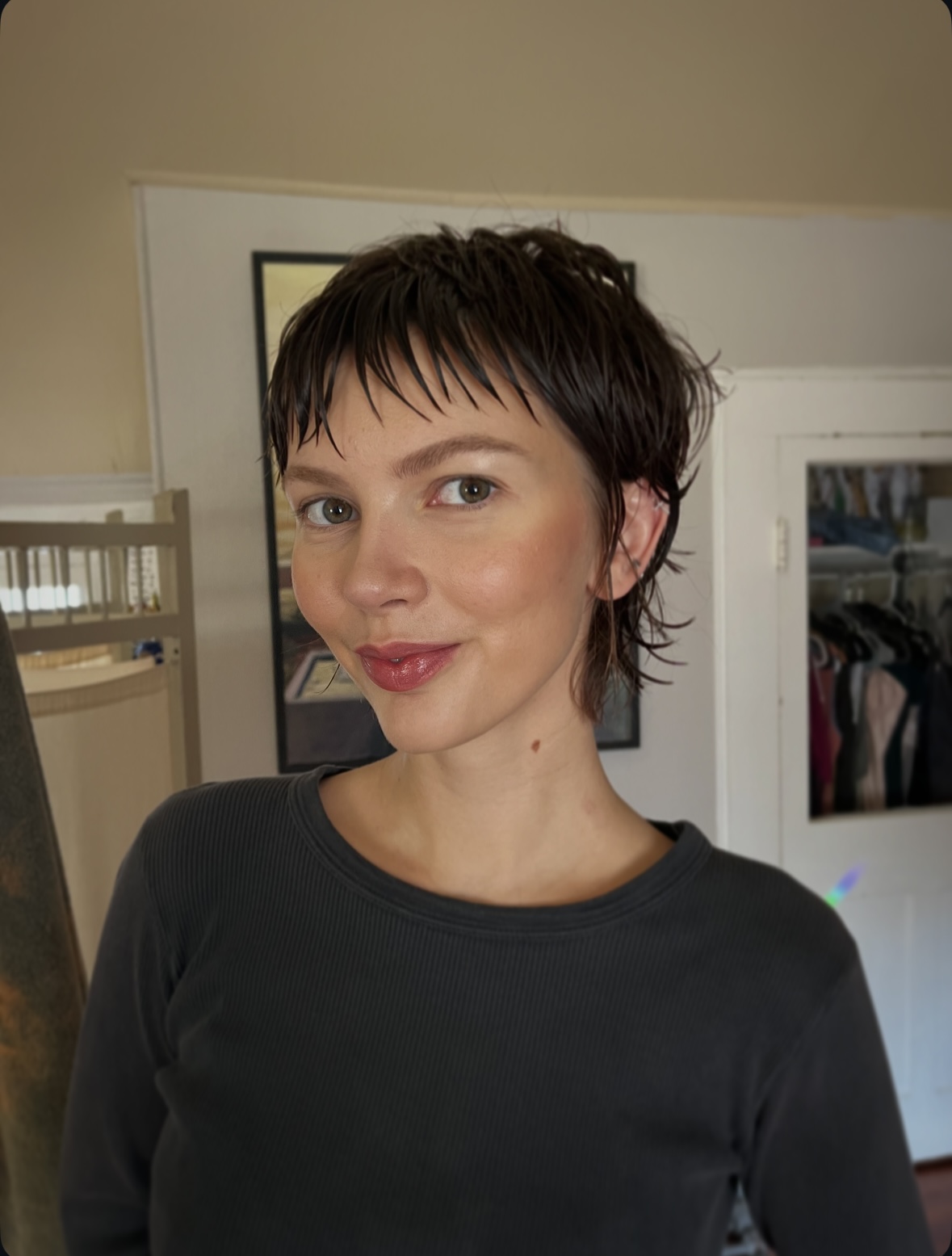
Ruby Zlotkowski is a writer and editor based in New Orleans, and currently works in the sustainable fashion industry. She has a BA from Loyola University, where she studied writing and began working with New Orleans Review. In her free time, she enjoys doing yoga, exploring the city, and being a part of local creative projects.