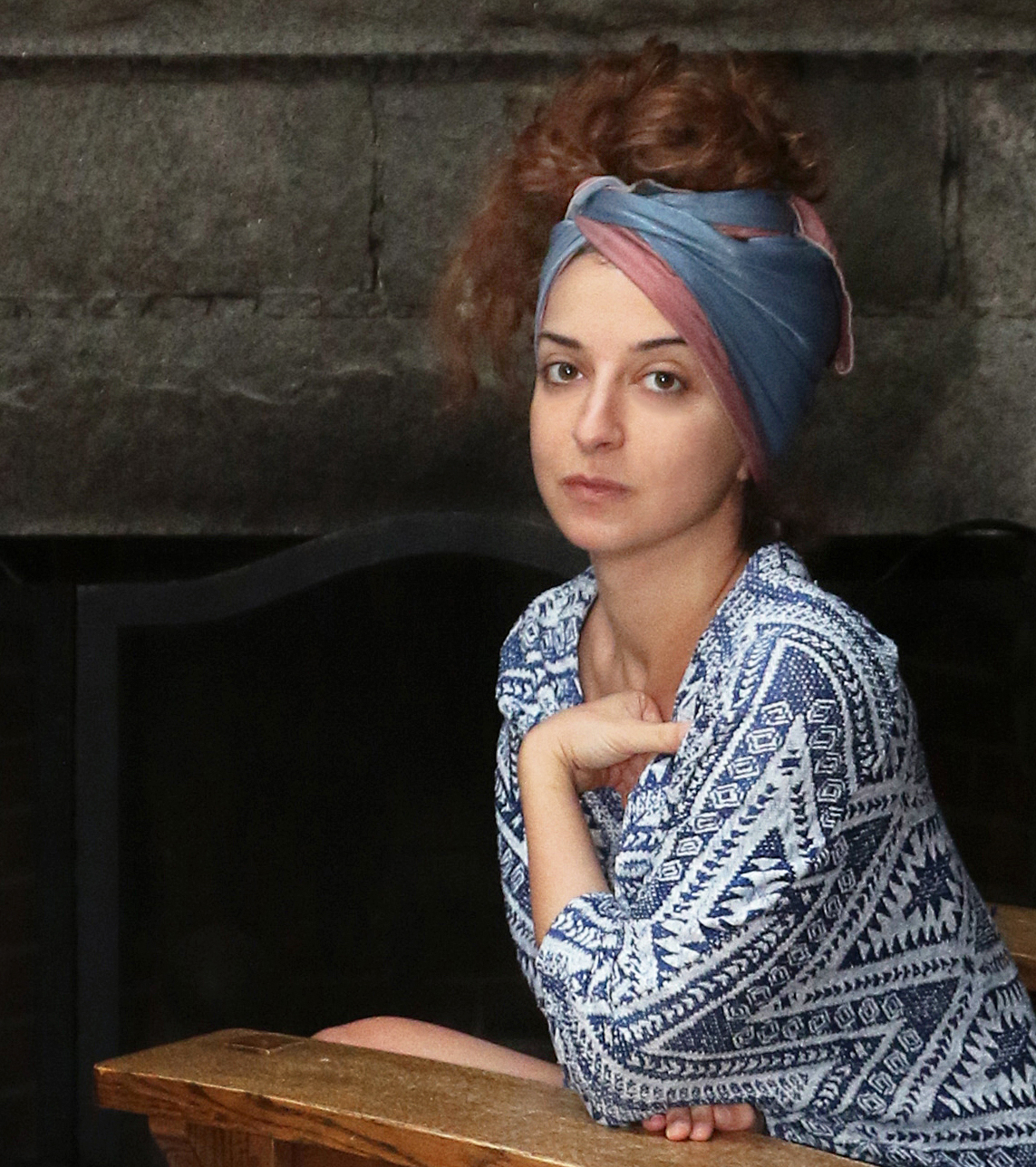
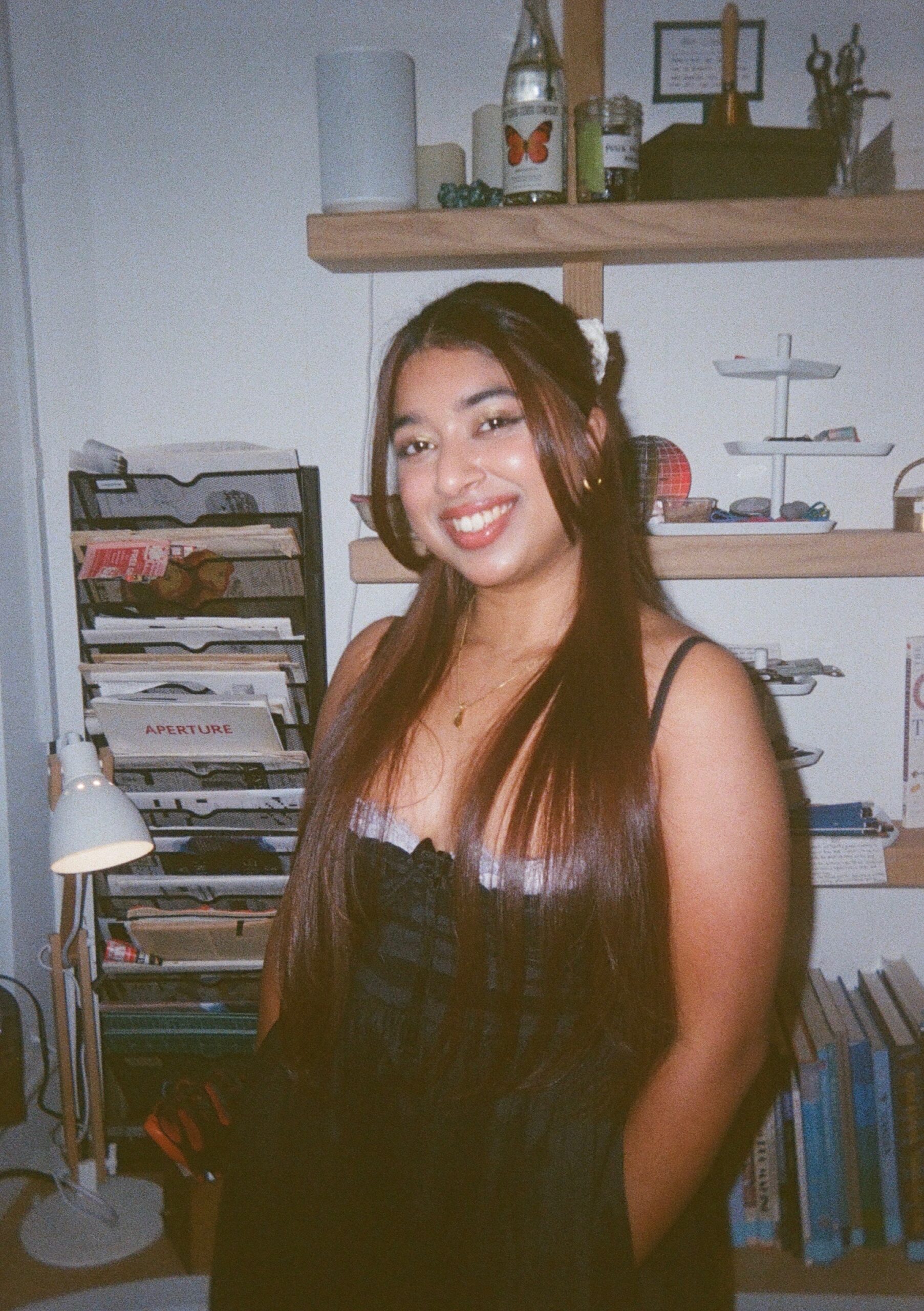
Loubna Mrie is a Syrian journalist, photographer, and writer, and a frequent commentator on Syrian and Middle Eastern affairs. The recipient of fellowships and residencies from Magnum Foundation, Ucross Foundation, and MacDowell, she has published work in The Atlantic, Rolling Stone, The Nation, Time, and the London Review of Books, among others.
***
NOR
Could you provide some insight into the work that goes into writing a memoir? How do you determine the structure, pacing, and what moments of your life are significant to include?
Mrie
I decided to write the book in present tense, but at first I actually wrote the book in past tense because I felt that by having (a separation) between my current self and my past it could offer me a blanket of comfort to remind myself these things happened in the past and I’m safe now. It made me feel more capable of writing everything (while) protecting my psyche. However, when I was reading it after I finished (writing), I realized how the comfort I got from writing in the past tense was creating a gap between myself and the reader. I wanted the reader to be with me in the front seat and not the back seat; I wanted the reader to be there with me as I learned and unlearned, took a wrong turn, and realized something. I really wanted people to understand that this and any revolution is about learning and unlearning.
I don’t recommend people writing a memoir in order to heal. I feel like writing helped me a lot. But also I [understood] that there were scenes that have emotional weight because of (my) trauma and the moment I put them on the paper they lose that emotional weight. Then you realize, oh shit, that’s not as important as I thought it was. Sometimes when you have something that you haven’t told anyone about it feels so important. When you’re choosing scenes for a memoir or a story, your brain kind of filters out what is important. If there is a story that is nagging in your brain, telling you it’s there and that it needs to be on the paper, you need to listen to that instinct and put it out there. However, sometimes that instinct comes from the emotional weight and you write it and are actually like, this is so fucking boring. Like yes, it is so important to me, however it does not relate to the story and there are no lessons here. It is not connected to the thread of the memoir, so you have to [remove] those scenes. I allowed myself to write anything that I felt needed to be written and then trusted myself to make those decisions like deleting (scenes), or throwing them into a folder I call “junkyard.” Trust yourself, and know that even if it doesn’t go into the book, it is a part of your healing process.
NOR
It is repeated throughout this book that only economic status can disgrace a man, while society can disgrace a woman for pretty much anything she does. By unabashedly sharing your life experiences, did you find that writing this memoir was a form of defiance towards patriarchal norms?
Mrie
One thing I really struggled with was [writing] the abortion scene. That was really terrifying for me because this is not something we write about as women. I really tried to snoop around to see if there are any (well-known) women [that lived through] the Arab Spring that have written about sex, addiction, or abortion. I personally couldn’t find any. I was really terrified because I didn’t know what the reaction was going to be. My sister also begged me to take that chapter out. Then I kind of reminded myself of how I felt when I was 22 going through that experience. When I got pregnant I was desperate to find an example of a woman who got pregnant outside of marriage and her life was not destroyed. All I could think of at that moment when I saw those lines on that pregnancy test was of all those examples I was fed growing up of women who got pregnant outside of marriage. Either you’re being killed by your family, bleeding to death in a shady clinic, dying by suicide, or being forced to marry the person who got you pregnant. I felt I owed my 22 year old self an example of a woman who went through this experience and her life was not destroyed. The responsibility for myself and for the truth became way more powerful than whatever fucked up shame I was going to feel. One incident in your life should not taint your life forever. I decided to break the cycle that pregnancy means the end of your life.
NOR
It is clear how much love you have for Syria, while also acknowledging how much pain your country has brought you. Did you ever feel pressure when writing to maintain nuance and truthfulness to your experiences while also feeling a sense of protectiveness from those who may twist things to perpetuate more harm towards your community?
Mrie
The tension was present throughout this entire writing process, but not being truthful about how deeply broken and violent our systems are only protects these systems. So at some point I did have to make that decision. Do I care more about protecting the image of Syria and my society, or about the future of people trapped inside these structures? For me, I came to the conclusion that our lives as women have more importance. The future of these women is more important to me than how the west perceives those realities. However, it actually made me think about the main difference between Syrians and Arabs who grew up in the region and Syrian-Americans and Arab-Americans who grew up in the United States. For us (who were raised in the region), we lived under those systems directly. The stakes feel more immediate and personal. We understand that refusing to speak honestly and address how violent these systems are can come at the expense of people’s lives and freedom. But for those who are in the diaspora, especially those who were shaped by western discourse after 9/11, there is a different priority for them because they are not affected by those systems directly. For them, making sure the western perception of the region (is positive) becomes the priority. They want to make sure that the perception is not weaponized for a right-wing narrative. I understand that instinct, but when your primary concern becomes correcting the western perception, the uncomfortable truth and reality of our societies get avoided all together. One (comment) I’ve been (receiving a lot) after people read the book is how honest the memoir is. I think the reason I was able to reach that level of honesty is because I completely stopped caring about how people were going to perceive it. In order to become as truthful as possible, I had to convince myself that no one was going to read this book except me. I was really able to reach that point when I said, this is for me and my only goal is to be as truthful as possible. You cannot reach that level of truthfulness if in the back of your head you are concerned about what [people like] Tucker Carlson or Candace Owens are going to say. I understand how things can be weaponized, but again, by not being truthful or critical about our systems, it only protects those systems. For me, changing society is way more important.
NOR
I think it’s important to acknowledge that you’re also coming from a place of love. You want change and the lives of your community and even yourself to be better. The people who try to twist or harm things are coming from a place of hate. So that’s a huge difference too (when it comes to criticism).
Mrie
I also want to say that as an Arab memoirist and immigrant, I feel my loyalty first goes to the women in my society that did not have the chance to break free. My silence about the systems that are violent towards (these women) won’t break that cycle. (My goal is to) break those cycles and to be as honest as possible. I think there’s so many books out there that are trying to paint the Syrian uprising as this perfect utopian thing where nothing went wrong and (all the harm came solely from) Assad. Now Assad is gone, but the killing did not stop because we have some deeply unaddressed issues within our communities.
NOR
You wrote “words can’t convey how a revolution transforms you” and “no image can capture the smell of death.” As a photojournalist, how do you navigate what you’re witnessing in real time and then trying to express those emotions through your camera lens?
Mrie
Photography has limits, and I think that’s why after I moved to the United States I stopped doing photography. Image can document destruction, but it cannot fully transmit the atmosphere, fear, smell, and psychological transformation that happens inside people living through violence. In the beginning of the book, I look through all these videos and photos of destruction and bombings and then I come face to face (for the first time) with a destroyed building and I’m terrified to realize there could be a dead body under my feet. I really wanted to include that scene because that moment really changed the way I think about videos and photos. It made me realize how limited photography is. Because I can take photos of destruction all day long, but I cannot bring you (as a viewer) to understand the smell or the atmosphere. You can see destroyed buildings from your screen, (but witnessing it in person) makes you more aware of the cruelty of someone throwing a bomb into a building knowing that there is a family sleeping in there. I think many journalists– especially those who do foreign politics and war reporting– struggle with: no matter how much you document and write about a certain conflict, the reality is always larger and more horrifying than what they can capture. In a way, I felt like photography was a survival mechanism. Photography made me focus on the technical task instead of fully (processing) the emotional weight of what was happening around me in real time. In a way, the camera was protecting me by making sure that I’m focusing on one thing. (Whether) it was checking if the white balance was in the right place or if the shutter speed was correct, it was a way of protecting me from actually absorbing what was happening around me.
NOR
It felt like you were “running into the next burning building” in order to avoid processing your grief, specifically your mother’s death. Do you feel like you’ve now allowed yourself the space to heal and what has that process looked like for you?
Mrie
Honestly, I allowed myself to grieve when I felt like I had a future. Sometimes it is very hard to allow yourself to crumble under the weight of grief when you feel like your life is not stable enough or if you don’t know if you have a future. You need a solid ground under your feet in order to heal. It took me almost 10 years in this country to feel this way, but I allowed myself to grieve and feel all kinds of emotions (once I felt safe). I felt anger, pain, frustration, but also this deep sadness for (my mother) and for myself. However, I was only able (to feel all of this) after I felt like I had a stable ground, because sometimes you don’t know what the outcome of this grief could be. Are you able to allow yourself to go down memory lane if you don’t know if you’re going to survive that?
NOR
In your copy of The Looming Tower, Peter left you a note: “Look for the small connections and pathways that both separate us and bring us together.” After exile and living in different countries, what are the connections you’ve noticed that can bridge various communities and social justice causes together?
Mrie
Before coming (to the United States), I always thought exile was reserved for people who were fleeing things like conflict and natural disasters. But I started to realize how deeply connected systems of injustice are, even when they are geographically separated; language and history change (throughout time), but many of the underlying structures repeat themselves. Even Americans who have never left the United States have lived their own version of displacement, surveillance, state violence, and dehumanization. So I thought about exile a lot, and how sometimes you need to be exiled from your own community in order to find yourself. Whether in Syria or the United States, lots of people are given that ultimatum: you either make yourself smaller or you don’t belong. Belonging in so many communities, or even political affiliations, becomes associated with silence and obedience. I’ve seen people who are outcasted from their communities for being anti-Trump or anti-Zionist. Lots of people here in the United States ask themselves the same thing I asked myself when I was 20. Is it home if it requires your silence? Is it home if it requires you to become someone you’re not in order to be loved and accepted by a community or a family?
So that really helped me build a community here and made me realize the importance of chosen family and chosen communities. Home is not always where you are born; sometimes home can be in those small instances of being with your friends or in a community where you feel you can be your full self and not be judged. That is what home means to me now, and I think so many Americans feel this way, especially after all these dark political moments in the country. I feel like if we start to understand those similarities, our approach for solidarity might become different. I see it a lot in some communities where there is a competition of who has suffered the most. I think solidarity becomes more meaningful when people stop competing over their suffering. Even when I first came to the United States, I felt the same: oh my god, I’m not going to relate to your suffering until you lived through a war, lost a family member, or saw dead bodies. But as I grew older, I realized that this notion of competing only destroys our fabric as comrades and in activist circles. Communities don’t need identical histories to recognize each other’s humanity. Some of the most powerful solidarity, in my opinion, emerges when people remain attentive to difference, while still recognizing shared struggles against erasure and injustice. You don’t have to live through what I lived through for me to recognize your pain or for me to understand that you’re living your own version of exile.
NOR
In your interview with The Guardian, you said “I have to leave my mark in this revolution.” Now almost 14 years since that interview, do you feel like you’ve accomplished this?
Mrie
I do. I think one of the biggest marks you can leave behind is your legacy as a witness. Being a witness also requires you to be as honest as possible to give future generations lessons to learn from what went wrong. I feel I left that. I hope for anyone in the future who wants to learn about Syria or get an account of the Syrian revolution from an Alawite perspective, they will have that (because of my memoir). I feel like leaving something for the future generations to read or to learn from is definitely a mark.
NOR
History isn’t necessarily defined by the truthfulness of things. It is usually people in power who get to determine how history is written or perceived. By sharing your own story, (you’re stating): I was here, this was my experience, and you can’t take that from me by writing it in a different way. Sharing your truth means writing your piece of history too.
Mrie
I think one of the reasons I wrote this book is because in 2018, there was this weird collective agreement of yalla, let’s just turn the page on what happened in Syria. I had a responsibility to write about what happened. It is very scary to feel like you lived through something and there is this erasure taking place while you’re still alive. It felt like one thing that I can do as a survivor, as a witness, is to make sure that my part of the story is not being erased.
NOR
When you first began documenting the revolution you had Naji there to guide you as a mentor. Is there any advice or knowledge you would like to pass on to the next generation of aspiring storytellers?
Mrie
Just read. Work on your craft because sometimes witnessing is not enough. You need to have the tools to turn the act of witnessing into a product that people can read and relate to, but you cannot do that if you do not work on your craft. I think reading is so important, especially for people who don’t have access to MFAs. I didn’t get an MFA or take writing classes. I learned writing by reading other memoirists and great journalists. (These tools) are accessible; you don’t have to spend thousands of dollars in universities to get that knowledge. We love MFAs; If you can do it, go do it. However, for women in societies that don’t have that access, it is very important to know that you don’t need institutional approval for you to write your story.
Briana Bhola is a digital marketer from Long Island, New York. She has a BA from Loyola University New Orleans, where she studied English with a concentration in film and digital media and minored in Middle East Peace Studies. Briana’s Goan and Guyanese heritage inspires her to pursue activist work, decolonize her bookshelf, and empower others during her free time. Her previous work can be found in New Orleans Review and The Massachusetts Review.